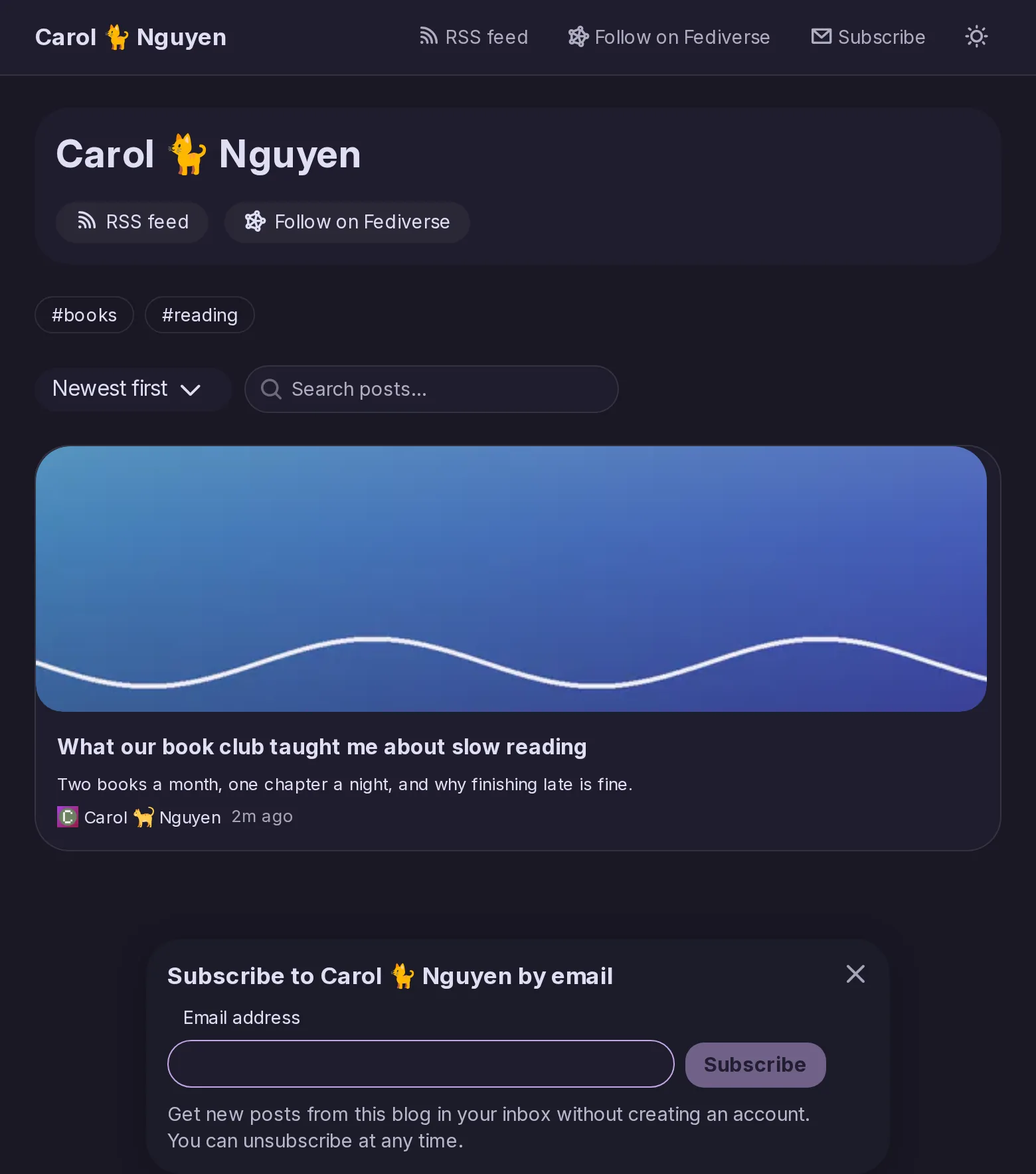
Federated blogs
Made by CatodonPublish long articles on standalone blog pages that other servers can follow as ActivityPub Articles.
6 essential features · 8 added since the fork
Publish long articles on standalone blog pages that other servers can follow as ActivityPub Articles.
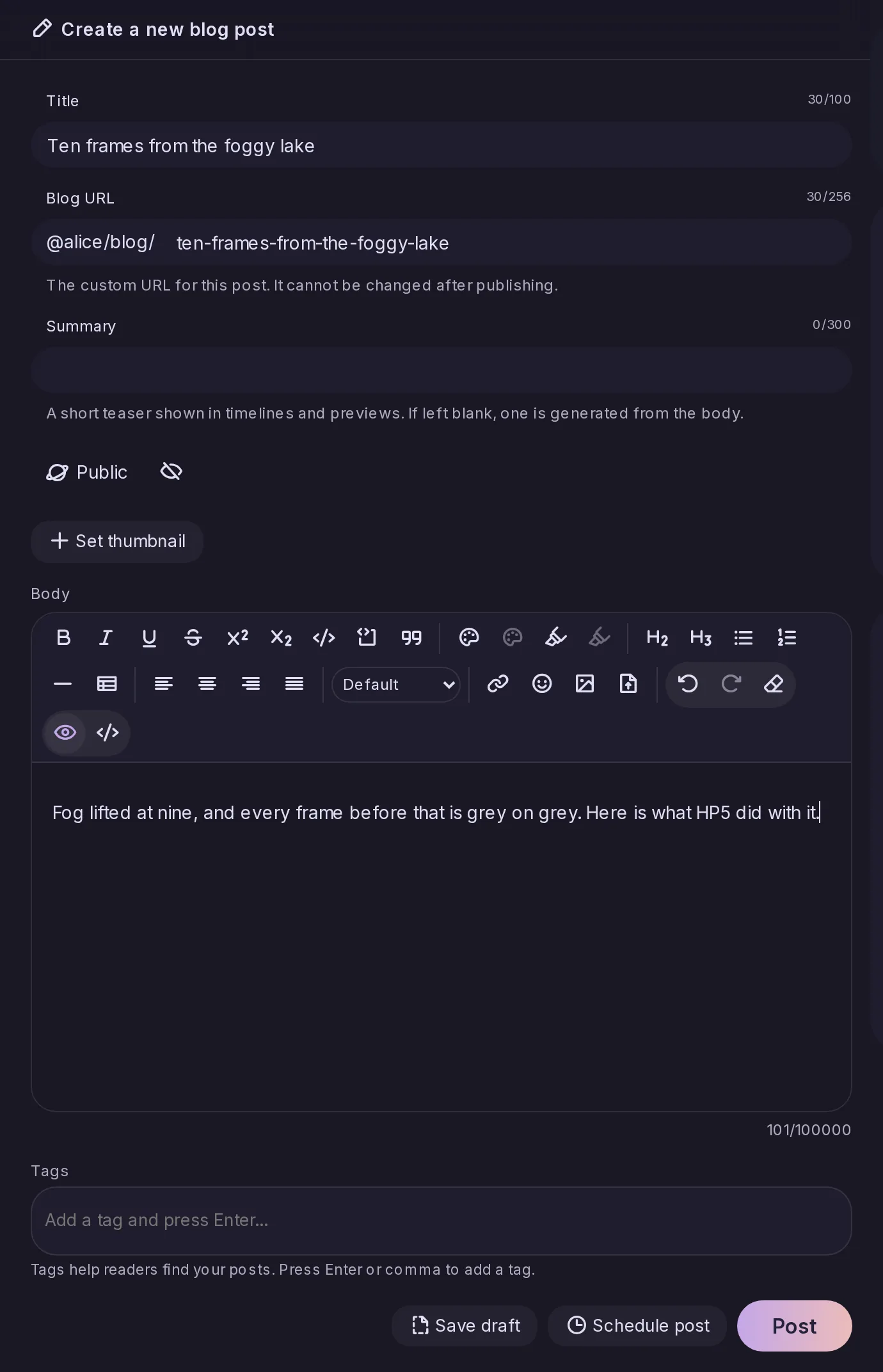
Write with a visual editor with tables, colors, images and GIFs, or switch to raw HTML; Pages stay unfederated.
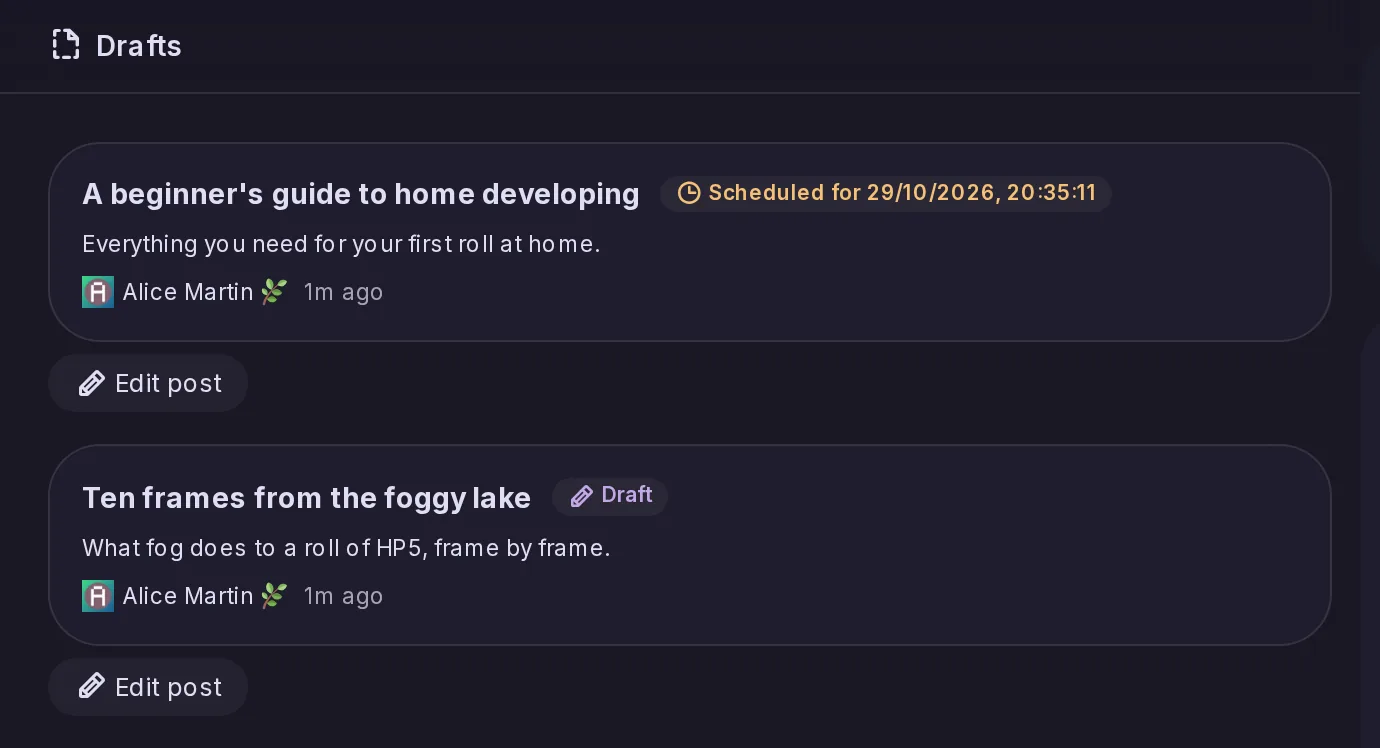
Keep unfinished articles as drafts and set a date for them to go live.
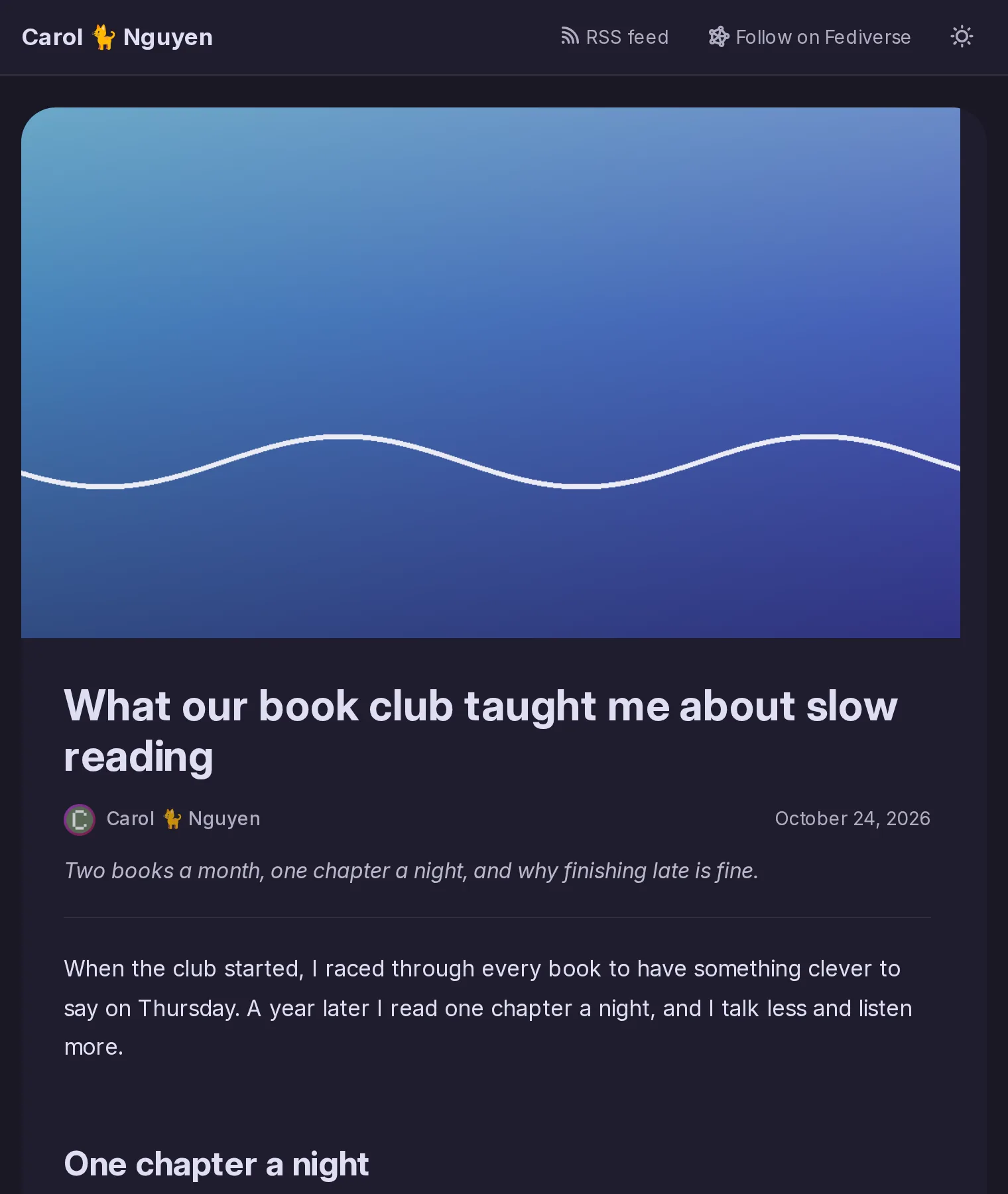
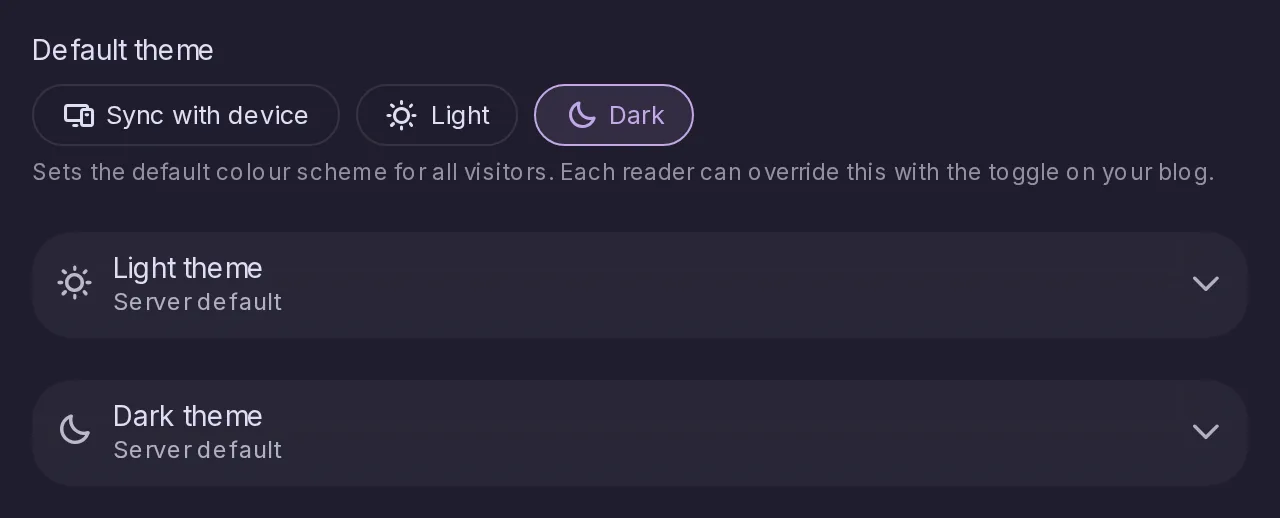
Give each blog its own light and dark look.
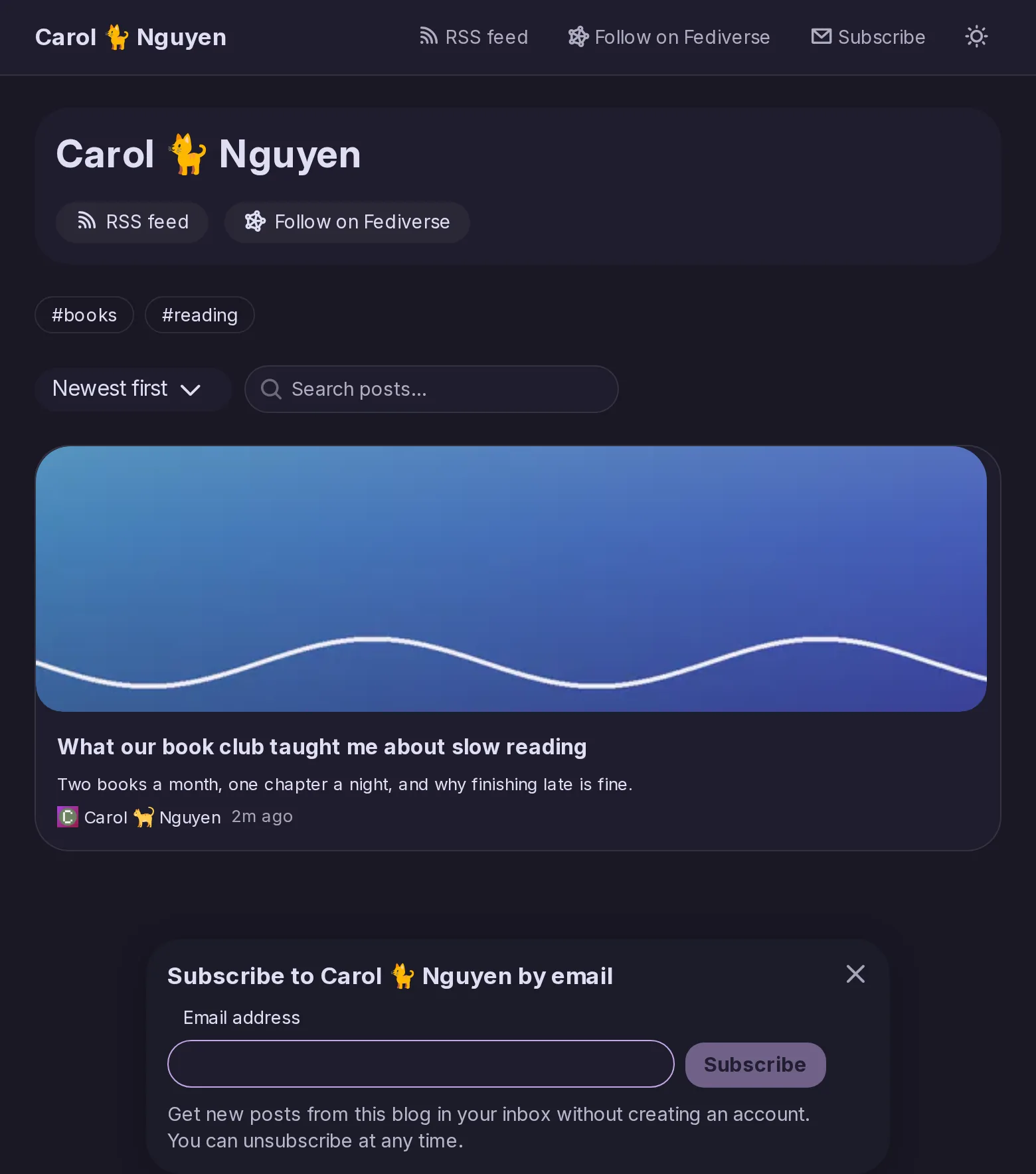
Follow a blog from a feed reader, or receive its posts by email without an account.
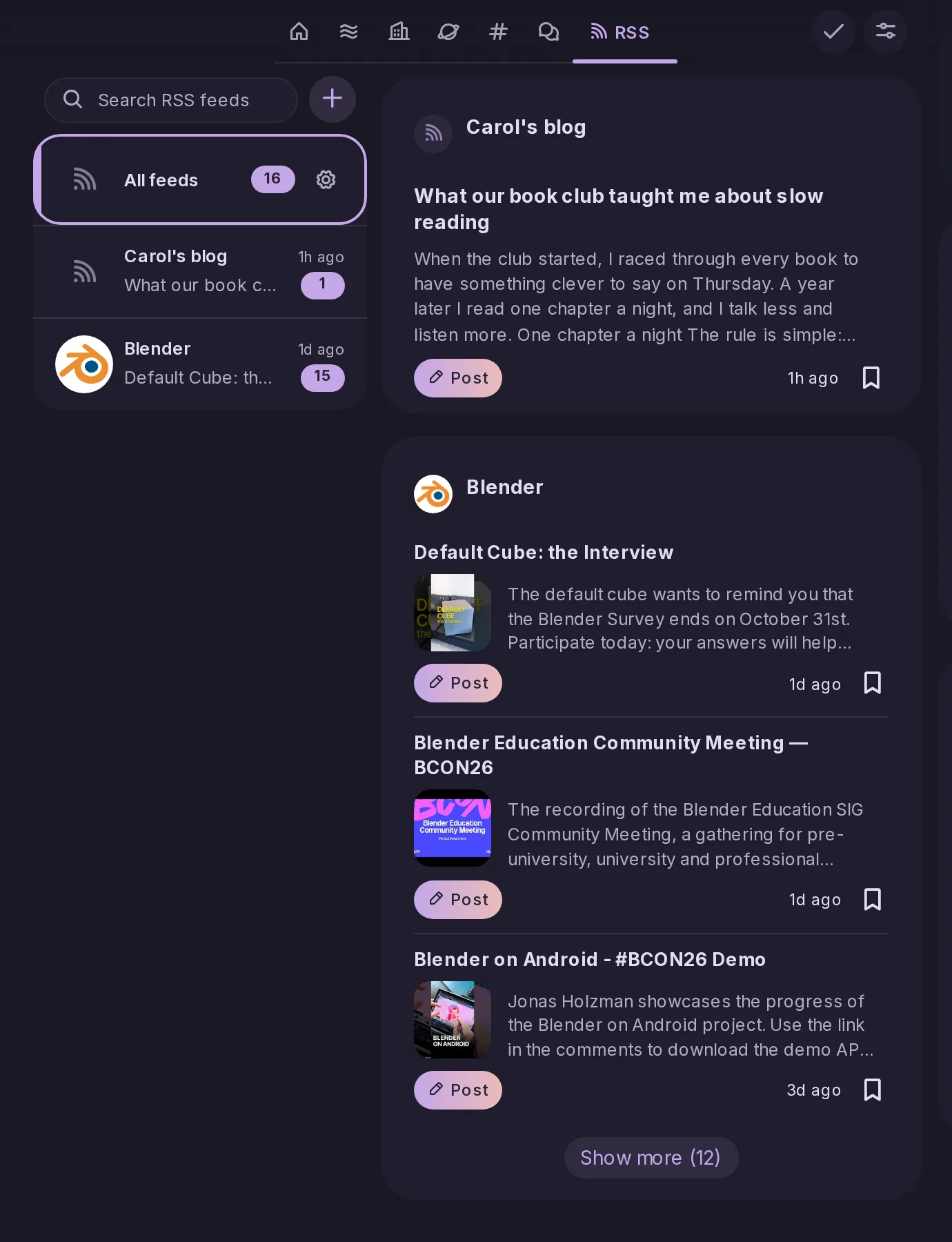
Follow any website's RSS feed and read it next to your posts, with OPML import and export.
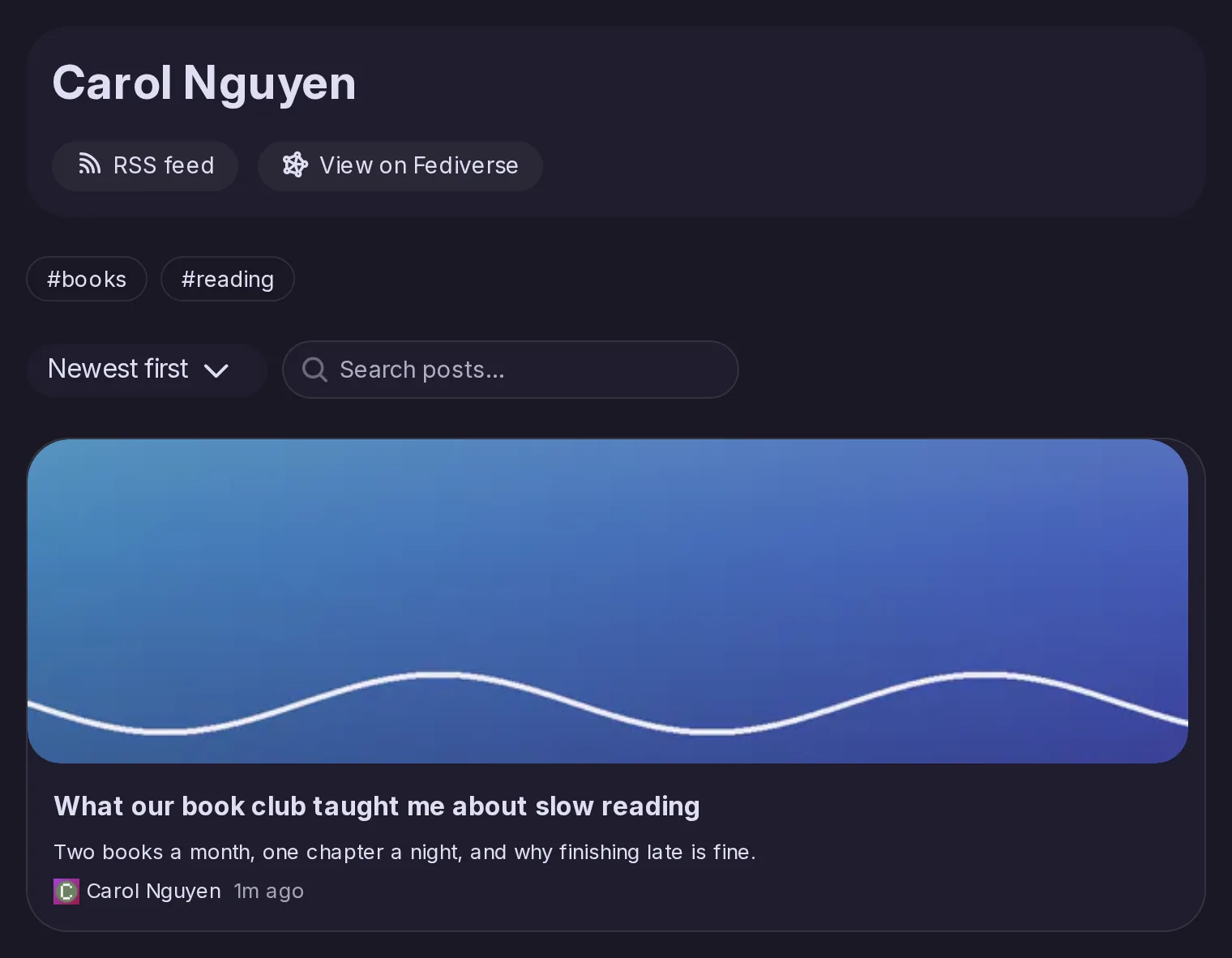
Long-form posts get blogs of their own: a standalone page for each post, a blog profile, an RSS feed, tags and search. You can keep drafts, schedule publication, add a thumbnail, choose a post’s address and give each blog its own light and dark theme.
Blog posts go out over ActivityPub as Articles, with their title, their text and the images in it, their tags and their thumbnail, and edits to the title or the text follow them. The blog’s profile is published along with the account.
Catodon finds the blog posts of accounts on other servers by reading their ActivityPub outbox, and fetches the earlier ones. Such an account shows a Blog tab even before that fetch has finished.
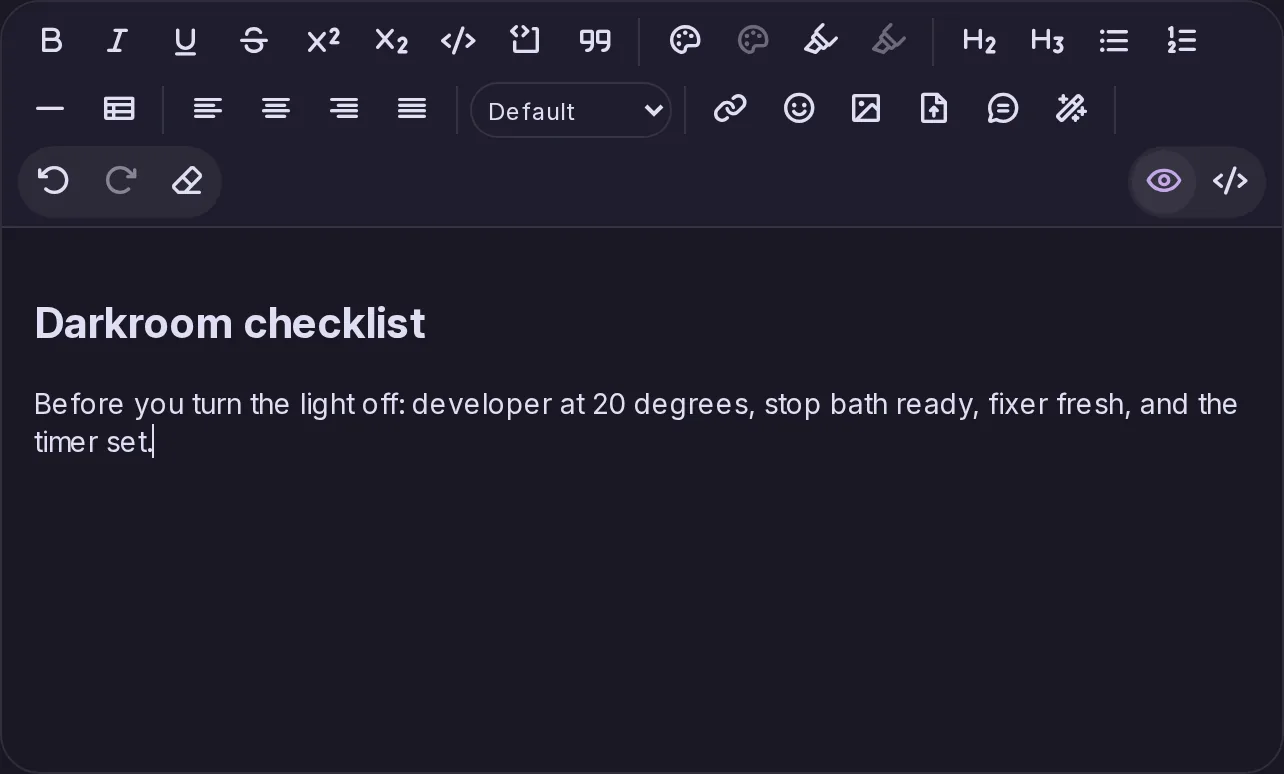
Pages are written in a single editor that works visually or in HTML, with richer formatting, tables, colours and block alignment. It shows custom emoji and can insert files from your Storage, images from a web address and GIFs from Klipy.
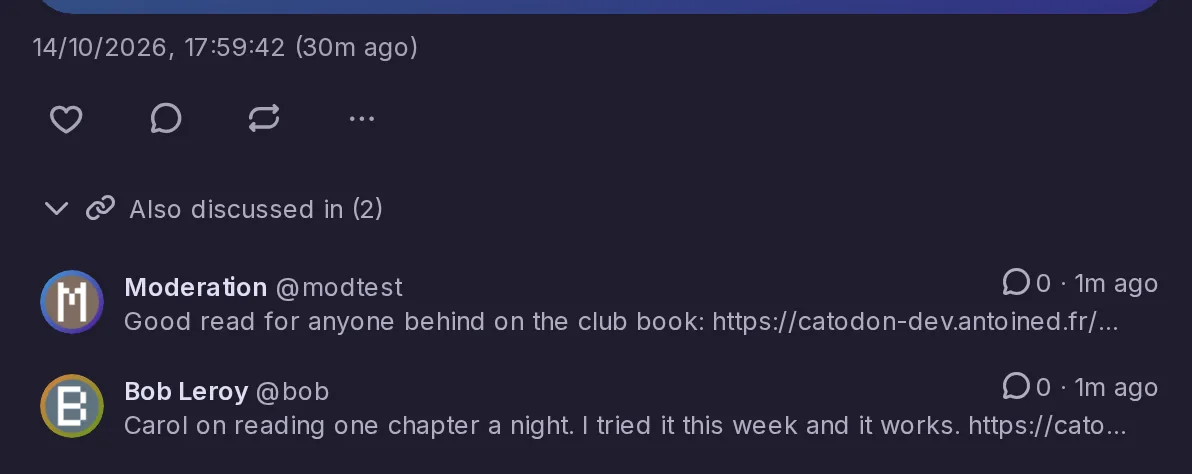
A blog post’s companion post, the one that carries its replies and reactions, now lists under “Also discussed in” the posts that link to the blog post, by either of its addresses. Who sees what follows the same rules as for any other post.
Articles received over ActivityPub are now displayed as rich HTML. HTTP signatures made with a CryptographicKey are accepted too.
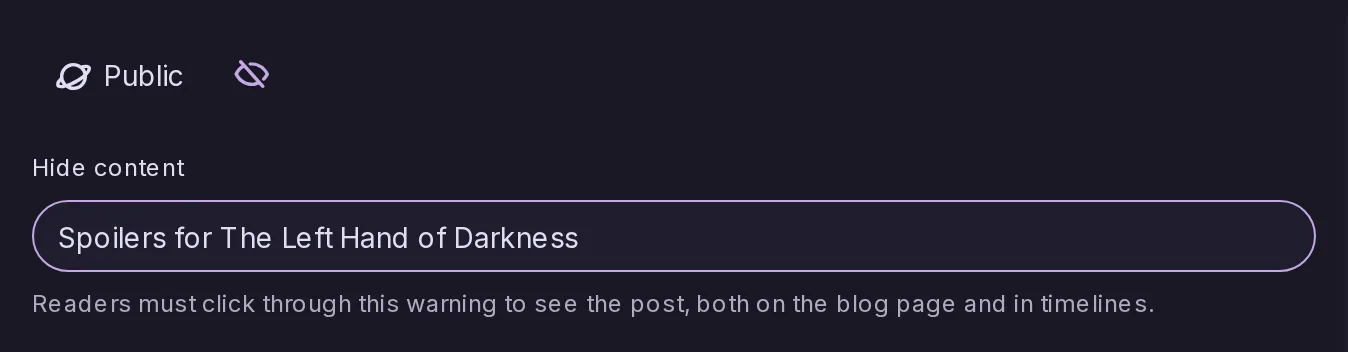
Blog posts can carry a content warning, each blog has its own privacy settings, and the Pages and blog editor gains a raw HTML mode.
Email subscriptions now reach blogs: a visitor who is not signed in finds a Subscribe button in the blog's header and a panel after reading a post to its end, and then gets the blog posts alone by email, each with its title, summary and link. An author can offer the profile's form, the blog's, both or neither, and email-subscriptions/create takes a new kind, all or blog.